
CASA (Bremen)
From static TYPO3 site to digital operations platform.
A modern public site plus dashboards to reduce admin overhead and enable online-first workflows.
Case study in review — details anonymized; student data never shown.
Quick facts
Details anonymized; student data never shown.
The problem
The organization had a static website and fragmented internal operations, creating delays in enrollment and heavy manual admin load.
Previous spend produced a brochure-style output instead of a system that could support workflows and role-based execution.
What we built
- • Modern public-facing website aligned with enrollment paths
- • Role-based dashboards for internal stakeholders
- • Online registration foundation for digital-first intake
- • Prototype-first delivery to remove trust gaps early
Why it worked
- • Clear phase boundaries allowed high-velocity delivery without scope drift.
- • Role-based architecture mapped product behavior to daily operations.
- • Early prototype checkpoints prevented late-stage rework.
Results
- • Reduced manual handoffs in enrollment workflows.
- • Replaced fragmented status updates with role-based visibility.
- • Enabled faster enrollment decisions with clearer operational data.
Operational architecture
System geometry
Golden-ratio spacing guides the module balance between surface, workflows, and orchestration.
Public Surface
Modern site aligned with enrollment paths and real intake behavior.
Operations Core
Role-based dashboards giving staff one shared source of truth.
Workflow Engine
Online-first registration foundation replacing fragmented manual loops.
Before / after operations
Before
- • Static TYPO3 pages disconnected from day-to-day operations.
- • Registration handling distributed across email, documents, and manual tracking.
- • Limited visibility for staff across enrollment stages.
After
- • Modern public surface connected to internal operational workflows.
- • Online-first registration foundation replacing core manual loops.
- • Role-based dashboards with shared visibility for staff decisions.
Screenshots
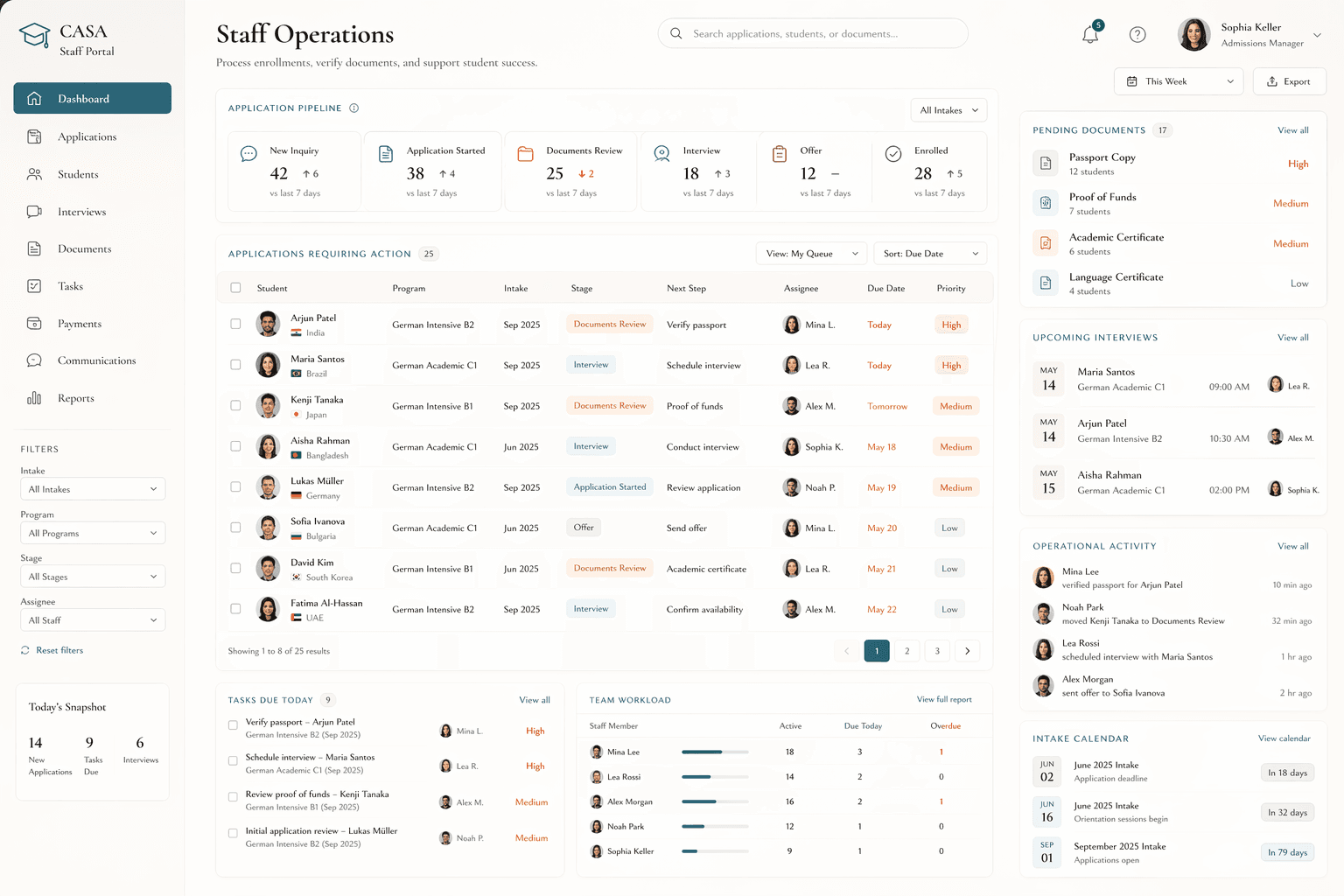
Staff visibility
Staff can see enrollment state, pending actions, and next-step ownership without chasing updates across inboxes.
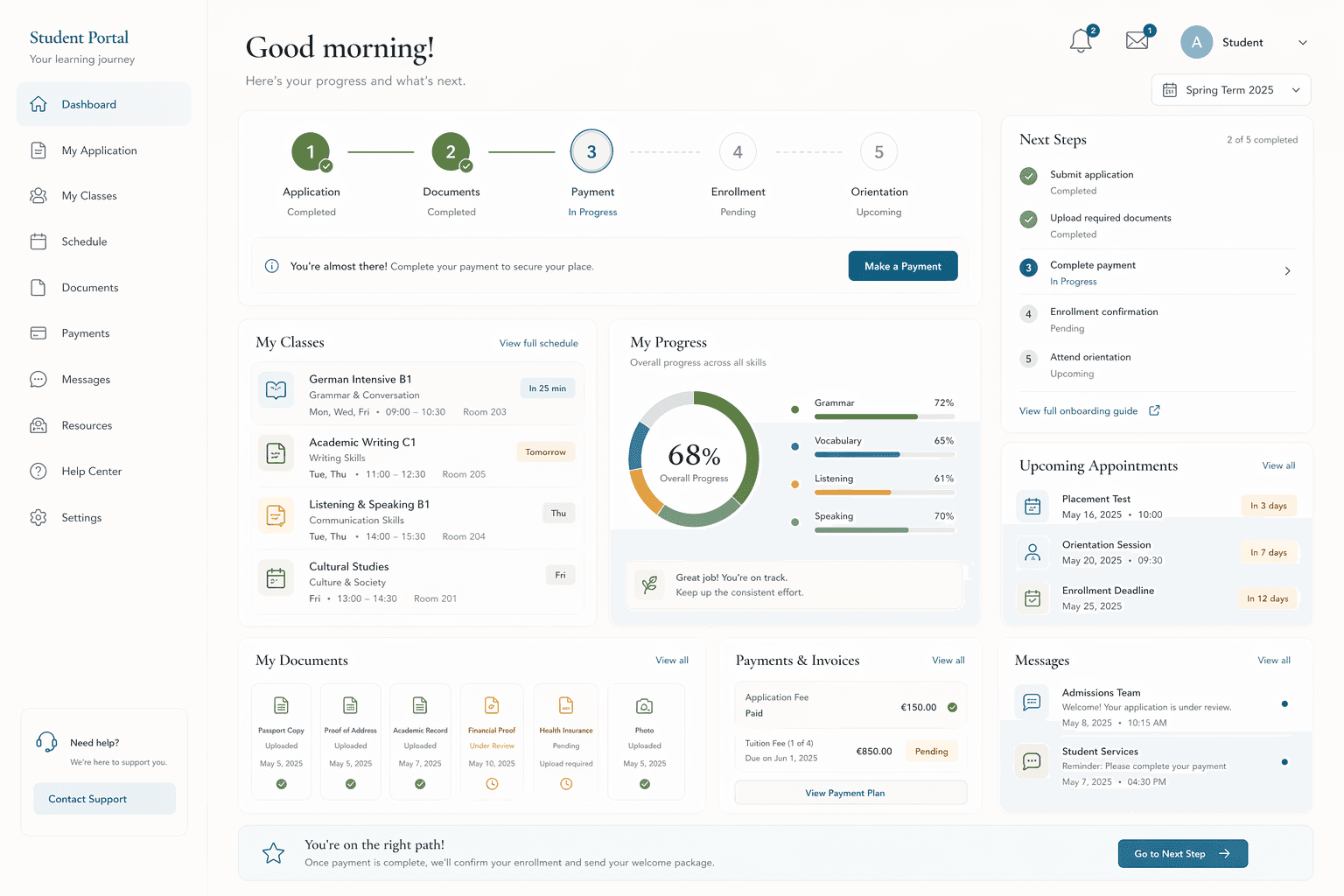
Student journey
The student view reduces ambiguity during onboarding by turning status and next actions into one readable journey.
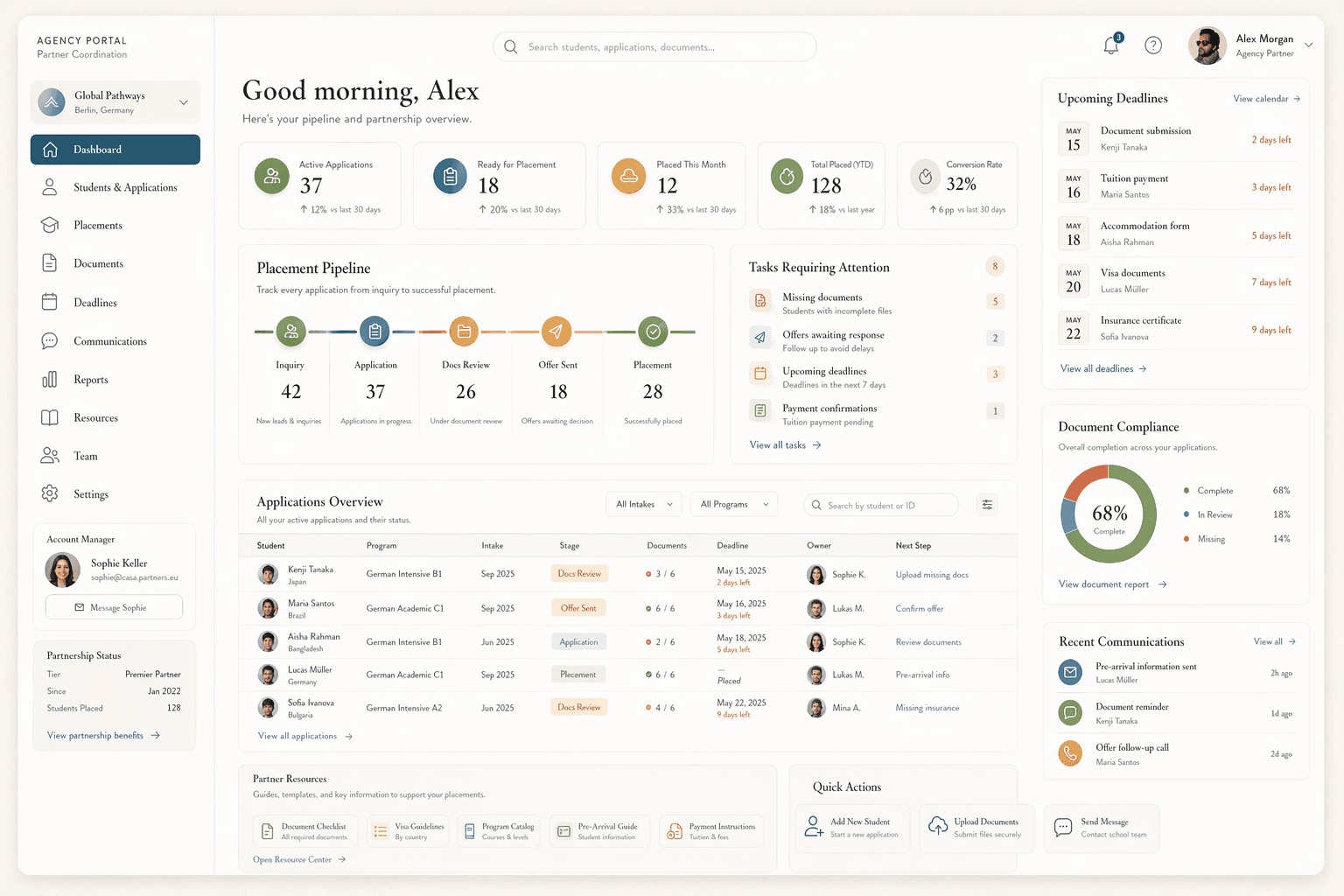
Agency coordination
Partner-facing workflow design keeps external coordination inside the same operational system instead of email loops.
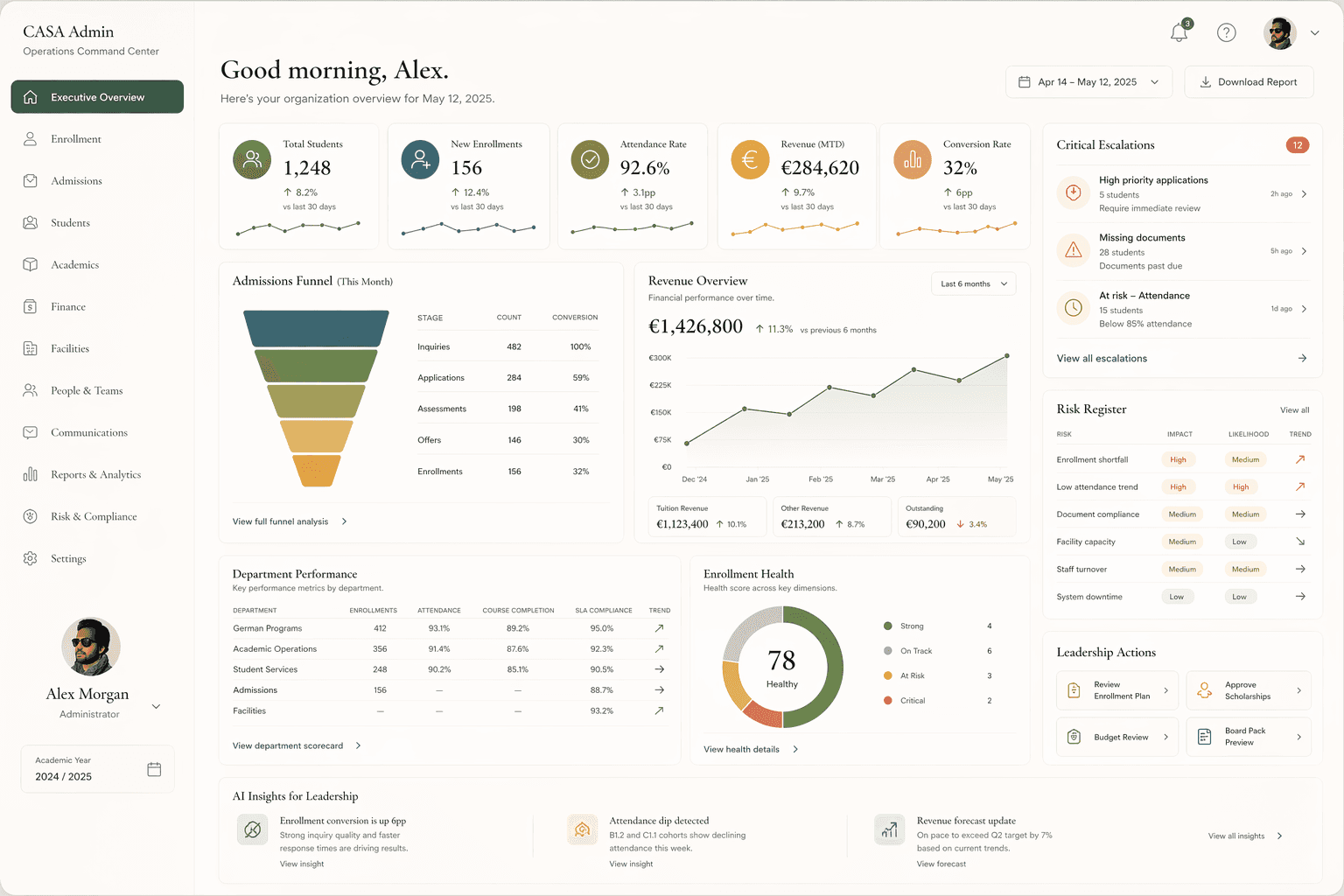
Admin control layer
The admin layer concentrates oversight, escalation, and decision-making into a single control surface.
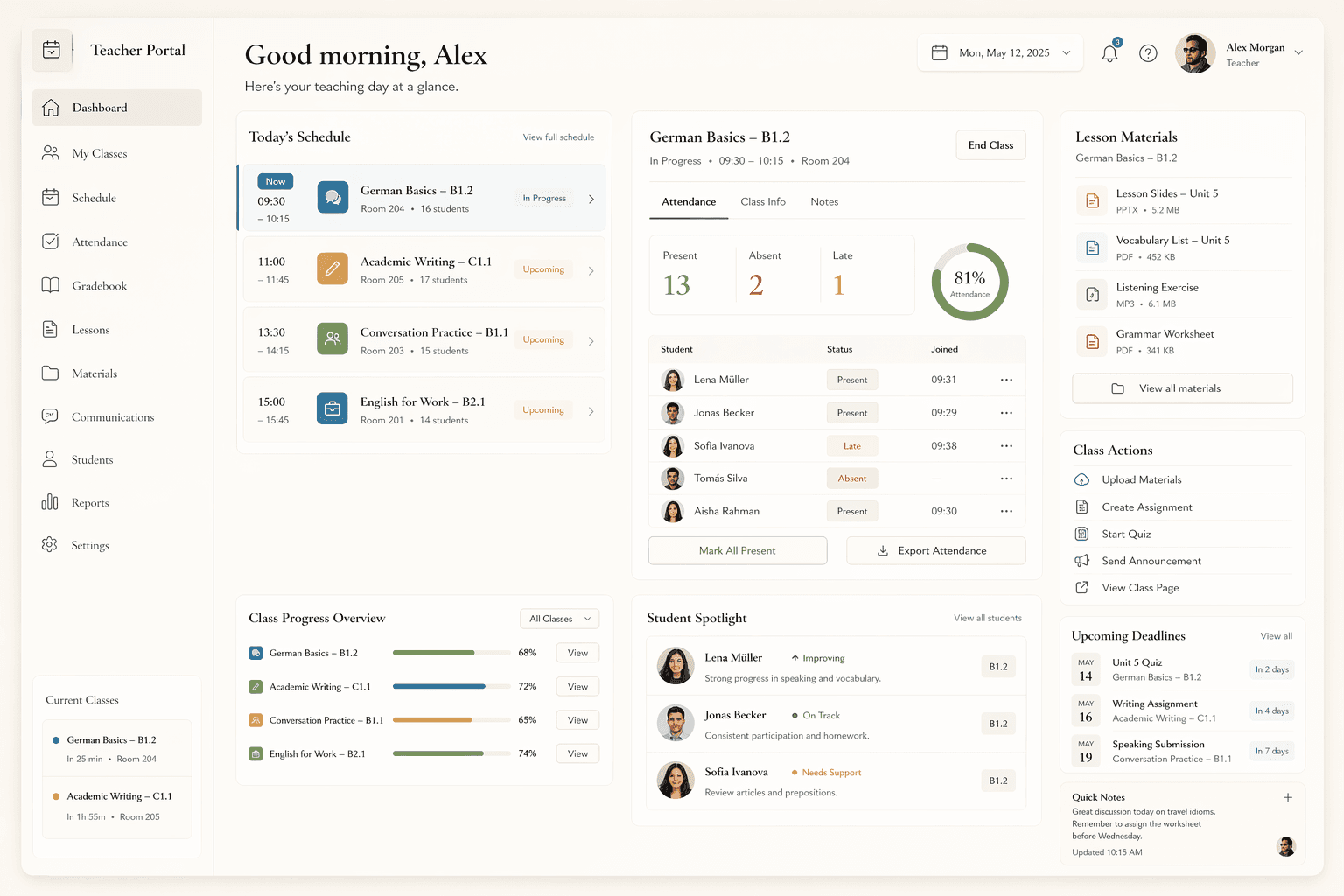
Teaching operations
Role-based teaching views connect classroom activity to the same operational data model used across the rest of the platform.
Want results like this?
30 minutes. No pitch deck. We’ll review your current setup and tell you exactly what we’d change.
Related implementation insights